
Why Municipalities and Local governments prefer to Go Solar Street Lighting
Municipalities and Local governments across the globe are facing the same urgent question:
How do we keep our communities safe, well-lit, and sustainable—without breaking the budget or depending on aging infrastructure?
For decades, traditional grid-powered street lighting has been treated as the default. But today, the cracks in that system are impossible to ignore:
- Skyrocketing energy bills
- High maintenance and replacement costs
- Inflexible installations requiring trenching and cabling
- Dangerous blackouts during emergencies
- Failure to meet environmental goals
Solar street lighting is not just an alternative anymore. For municipalities serious about safety, savings, and sustainability, it is the only logical solution.
Let’s break down exactly why so many local governments are replacing outdated systems with smart, solar-powered street lights—and how they’re saving millions doing it.
The Top Benefits of Solar Street Lighting for Municipal Use
1. Massive Cost Reductions Without Sacrificing Performance
Traditional street lights cost municipalities millions annually in electricity, maintenance, and infrastructure upgrades. Every new grid-tied light installation demands trenching, wiring, and complex planning.
By contrast, solar street lights eliminate electricity bills, reduce labor-intensive maintenance, and avoid expensive underground wiring. Once installed, they operate autonomously with zero energy costs.
A study by the World Bank showed that municipalities switching to solar saved up to $4,000 USD per street light over 10 years.
2. Lighting Where the Grid Can’t Reach
Not all communities are equal. Many underserved or newly developed areas lack proper lighting due to grid limitations. Solar street lights can be installed anywhere — without trenching, permits, or dependence on grid availability.
This is especially crucial for:
- Rural roads and remote villages
- Parks and recreational zones
- Disaster-prone or flood-affected zones
- Rapid urban expansion sites
Municipalities gain the flexibility to light any space, any time, accelerating infrastructure development and increasing public satisfaction.
3. Enhanced Public Safety and Crime Prevention
Reliable lighting is directly tied to reduced crime and safer communities. But conventional lighting systems are vulnerable to power outages, poor maintenance, and grid disruptions.
Solar street lighting ensures uninterrupted illumination, even during grid failures. With features like motion sensors, adaptive brightness, and automatic on/off systems, modern solar lighting boosts safety while conserving energy.
Cities that adopt solar lighting report:
- Lower nighttime accidents
- Increased foot traffic in parks and trails
- Improved perception of public safety
4. Environmental Responsibility That’s Actionable
Sustainability is no longer a buzzword — it’s a benchmark for funding, public trust, and long-term resilience. Solar street lighting helps municipalities instantly reduce their carbon footprint, aligning with ESG goals, COP climate targets, and smart city visions.
Unlike grid-powered lights, solar lighting:
- Produces zero emissions during operation
- Uses renewable solar energy
- Reduces reliance on fossil fuels
- Promotes energy independence
In a world where every city is being evaluated for its green efforts, this is a clear, visible win.
5. Low Maintenance, Long-Term Value
Modern solar street lights are built with:
- High-efficiency LiFePO4 batteries
- MPPT controllers for maximum solar conversion
- LEDs with over 50,000 hours of life
- Rugged, weatherproof construction
Municipalities benefit from years of hassle-free performance with minimal intervention — slashing operating costs and freeing up public works resources.
6. Smart Technology Integration for Smarter Cities
Many municipalities are integrating solar lighting into their smart city infrastructure. With GPS tracking, IoT remote monitoring, dimming schedules, and data collection capabilities, these systems transform street lights into citywide sensors.
This real-time control means better resource allocation, proactive maintenance, and intelligent lighting based on traffic or weather conditions — future-ready functionality with real-world payoffs.
Real-World Municipal Success
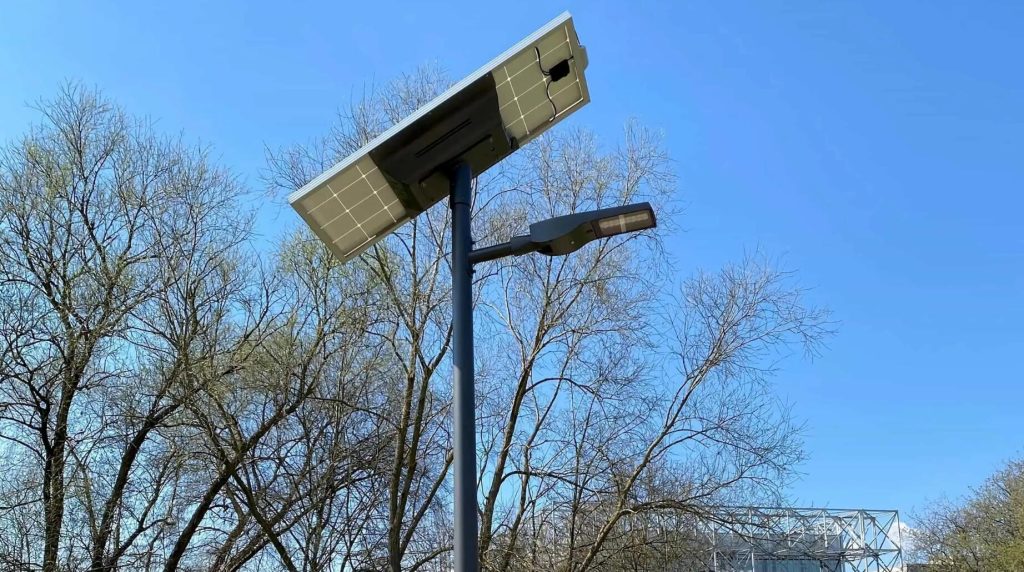
- San Diego, USA: Installed over 3,000 solar street lights, reducing lighting-related emissions by 70%.
- Accra, Ghana: Deployed solar street lights in off-grid zones, improving access and safety in underserved communities.
- Nice, France: Partnered with sustainable infrastructure providers to create solar-lit smart parks without disturbing the city’s heritage grid system.
These pilot projects — they are replicable models of success showing how solar lighting modernizes urban and rural spaces alike.
Go Solar Isn’t an Option. It’s the Standard.
Municipalities are no longer experimenting with solar. They’re adopting it as standard infrastructure — because it works. Because it saves money. Because it empowers cities to serve better, faster, and smarter.
At ANETHIC, we specialize in municipal-grade solar street light solutions built to exceed public infrastructure demands. With easy installation, cutting-edge solar tech, and proven results across Europe and Asia, our solar lighting systems are helping cities light smarter, cleaner, and safer.